
Warm up your dinner routine with my Thai Coconut Curry Soup! This dish bursts with flavor, comfort, and just the right amount of spice. Whether you’re cooking for yourself or sharing with loved ones, I’ve got all the details to make it perfect. From quick ingredient swaps to easy cooking tips, you’ll find everything you need to whip up this tasty meal. Let’s dive in and get cooking!
Why I Love This Recipe
- Bold Flavors: This soup is a vibrant celebration of Thai cuisine, showcasing the perfect balance of creamy coconut and spicy red curry.
- Quick and Easy: With a prep time of just 10 minutes, this dish is ideal for busy weeknights or last-minute gatherings.
- Healthy Ingredients: Packed with fresh vegetables like bell peppers and spinach, this soup is both nutritious and satisfying.
- Customizable: Easily adapt this recipe by adding your favorite proteins or grains for a heartier meal that suits your taste.
Ingredients
List of Ingredients
- 1 tablespoon coconut oil
- 1 medium onion, diced
- 3 cloves garlic, minced
- 1 tablespoon fresh ginger, grated
- 2 tablespoons red curry paste
- 1 can (14 oz) coconut milk
- 4 cups vegetable broth
- 1 tablespoon soy sauce or tamari
- 1 tablespoon fresh lime juice
- 1 cup bell pepper, sliced (mix red, yellow, and green)
- 1 cup sugar snap peas, trimmed
- 1 cup baby spinach leaves
- Fresh cilantro, for garnish
- Lime wedges, for serving
- Optional: Cooked rice or rice noodles
Ingredient Substitutions
You can swap coconut oil for olive oil if you like. For a lighter taste, use low-fat coconut milk. If you can't find red curry paste, yellow curry paste works too. If you want a different veggie, try carrots or broccoli instead of bell peppers. To make it gluten-free, choose tamari instead of soy sauce. You can also use lime juice from a bottle in a pinch.
Nutritional Information
This soup has many health benefits. Each serving offers:
- Calories: About 250
- Protein: 6g
- Carbohydrates: 30g
- Fat: 14g
- Fiber: 5g
- Vitamin A: 50% of daily needs
- Vitamin C: 70% of daily needs
This soup is rich in flavors and nutrients. It warms you up while being healthy and tasty. Perfect for a quick meal!
Step-by-Step Instructions
Preparation Steps
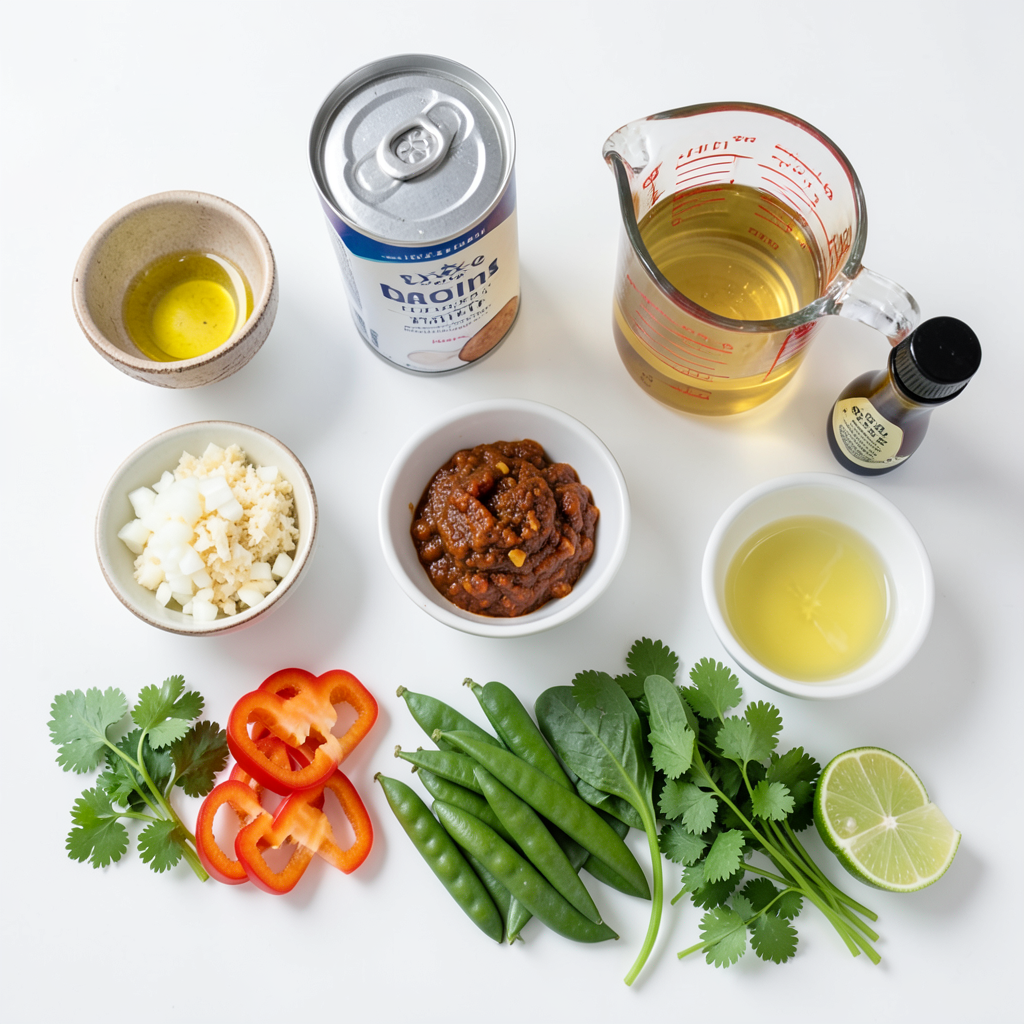
To start, gather your ingredients. You need:
- 1 tablespoon coconut oil
- 1 medium onion, diced
- 3 cloves garlic, minced
- 1 tablespoon fresh ginger, grated
- 2 tablespoons red curry paste
- 1 can (14 oz) coconut milk
- 4 cups vegetable broth
- 1 tablespoon soy sauce or tamari
- 1 tablespoon fresh lime juice
- 1 cup bell pepper, sliced
- 1 cup sugar snap peas, trimmed
- 1 cup baby spinach leaves
- Fresh cilantro, for garnish
- Lime wedges, for serving
- Optional: Cooked rice or rice noodles
Chop the onion, garlic, and ginger. Slice the bell peppers and trim the sugar snap peas.
Cooking Process
In a large pot, heat the coconut oil over medium heat. Once hot, add the diced onion. Sauté for about 5 minutes until it turns soft and clear. Then, add the minced garlic and grated ginger. Cook for one more minute until it smells good.
Now, stir in the red curry paste. Let it cook for 2 minutes to bring out the flavor. Next, pour in the coconut milk and vegetable broth. Stir well and bring it to a gentle boil.
When it boils, lower the heat and let it simmer for 10 minutes. This helps all the flavors mix well. After that, add the soy sauce and fresh lime juice. Toss in the sliced bell peppers and sugar snap peas. Simmer for another 5 minutes to keep the veggies crunchy.
Finally, fold in the baby spinach leaves. They will wilt quickly. Taste the soup and adjust the seasoning if needed.
Serving Suggestions
Serve the soup hot. Ladle it into bowls and top with fresh cilantro. Add a wedge of lime for extra flavor. For a heartier meal, dish it over cooked rice or rice noodles. You can also add thinly sliced chili or a sprinkle of sesame seeds for fun texture. Enjoy every warm and creamy spoonful!
Tips & Tricks
How to Enhance Flavor
To boost the flavor of your Thai coconut curry soup, focus on fresh ingredients. Use fresh ginger, garlic, and herbs. They make a big difference. Consider adding a touch of fish sauce or tamari for depth. You can also squeeze in more lime juice to brighten the taste. If you like heat, add chopped red chili or a dash of cayenne pepper.
Common Mistakes to Avoid
One common mistake is not sautéing the curry paste long enough. This step builds flavor. Don't skip it! Another mistake is overcooking the vegetables. You want them crisp, not mushy. Lastly, be careful with salt. Taste the soup before adding extra salt, as soy sauce can add plenty.
Best Practices for Cooking
Cooking the soup slowly brings out the best flavors. Start by melting the coconut oil and take your time with the onions. Let them soften fully. Stir often to avoid sticking. When adding the coconut milk and broth, do it slowly. Stir well to mix. Simmer gently rather than boiling hard. This keeps the soup creamy and smooth. Enjoy the process, and let the rich aromas guide you!
Pro Tips
- Enhance the Flavor: To deepen the flavor of the soup, allow the red curry paste to cook for a few extra minutes before adding the liquids. This helps release the oils and intensify the spices.
- Vegetable Variations: Feel free to mix in other vegetables like zucchini, carrots, or mushrooms. Just ensure that they are cut to similar sizes for even cooking.
- Adjusting Spice Level: For a spicier kick, add more red curry paste or chopped fresh chili peppers. Conversely, if you prefer a milder taste, start with a smaller amount and adjust gradually.
- Make it Heartier: If you're looking for a more filling meal, serve the soup over cooked rice or rice noodles. This not only adds texture but also makes it more satisfying.
Variations
Vegetarian and Vegan Options
You can easily make this soup vegetarian or vegan. Start by using vegetable broth instead of chicken broth. The recipe already uses coconut milk, which is vegan. Add more vegetables for flavor and texture. You can try carrots, zucchini, or mushrooms. These choices make the soup hearty and filling.
Gluten-Free Modifications
If you need a gluten-free soup, use tamari instead of soy sauce. Check your curry paste to ensure it's gluten-free. Most brands are, but it's always good to check. Serve the soup with rice, which is naturally gluten-free. You can also use rice noodles for a fun twist.
Alternative Proteins and Add-Ins
Want to add protein? You can include tofu or chickpeas. Tofu is great when you cube it and sauté it first. Chickpeas add a nice texture and flavor. If you want a meat option, shrimp or chicken works well too. Just cook them in the soup until they are done. For a crunch, you can also add nuts, like cashews or peanuts, right before serving.
Storage Info
How to Store Leftovers
Let your soup cool before storing. Use an airtight container for the best results. This keeps flavors fresh. You can store it in the fridge for up to three days. Make sure to label the container with the date.
Reheating Instructions
When you’re ready to eat, gently reheat the soup. You can use a pot on the stove or a microwave. If you use the stove, heat it on low. Stir often to avoid burning. For the microwave, heat in short bursts. Stir after each burst to ensure even warming.
Freezing Tips
If you want to freeze the soup, pour it into freezer-safe containers. Leave space at the top for expansion. It can last up to three months in the freezer. When ready to eat, thaw it overnight in the fridge. Reheat as mentioned above for the best taste.
FAQs
What can I use instead of coconut milk?
You can use almond milk or soy milk. Both options work well. They won’t have the same creaminess. You might want to add a bit of cornstarch to thicken it. Another choice is cashew cream, which adds richness. Just blend soaked cashews with water until smooth.
Can I make this soup ahead of time?
Yes, you can make this soup ahead. It tastes great after sitting for a while. Just let it cool and store it in the fridge. It will keep for about three days. When ready, reheat it on the stove. Be sure to stir well and add a splash of broth if it thickens too much.
How spicy is this recipe?
This recipe has a mild to medium spice level. The red curry paste gives it warmth, but it won’t overwhelm you. If you like it spicier, add more curry paste or fresh chili. For a milder version, start with less curry paste and taste as you go. Adjust to your heat preference!
In this blog post, we explored the key ingredients, cooking steps, and useful tips for making a great dish. We went over substitutions, nutritional details, and ways to store leftovers. It’s important to avoid common mistakes to enhance the flavor. Remember, there are options for different diets, too. Making adjustments can help you find the right fit. Use what you learned to create something tasty and enjoyable. Happy cooking!