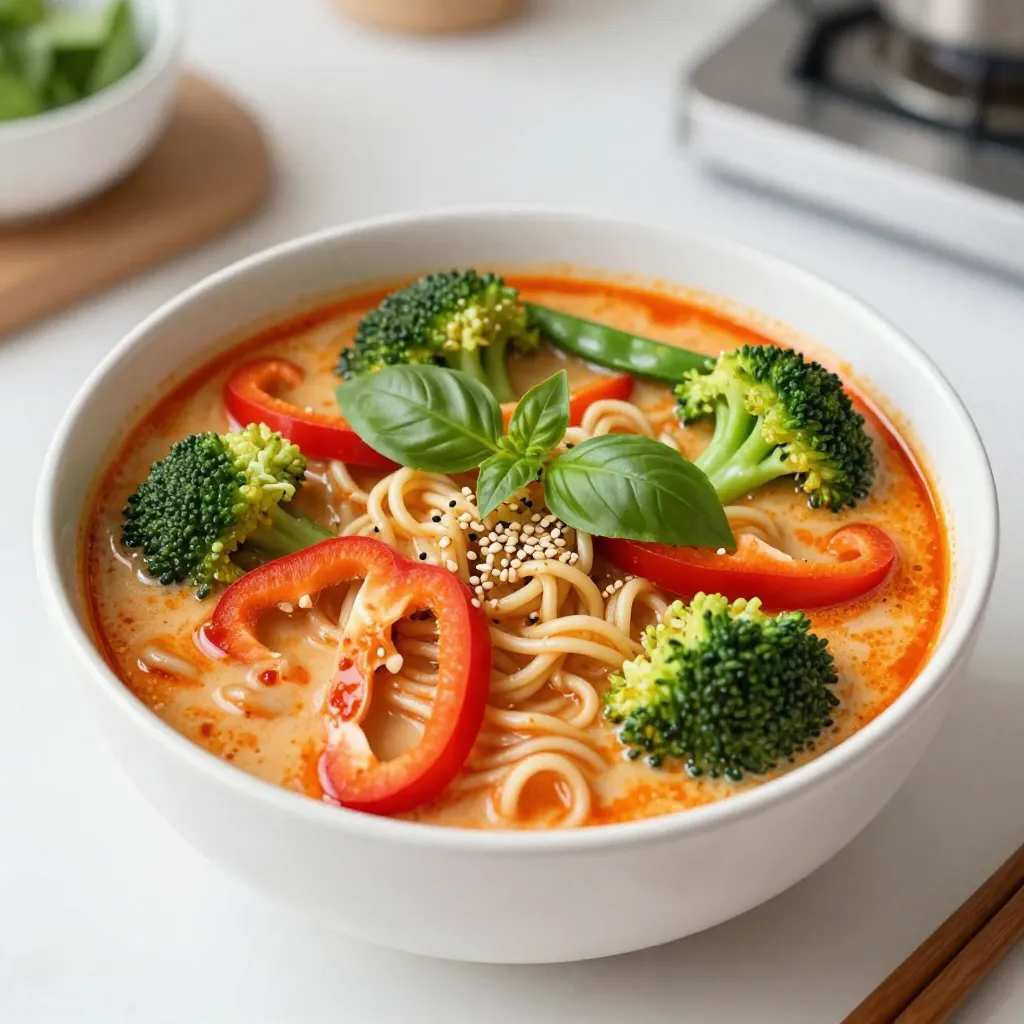
Craving a quick and tasty meal? Look no further than my Red Curry Vegetable Ramen! Packed with vibrant veggies and a rich, spicy broth, this dish is both satisfying and easy to make. You’ll love how simple it is to whip up a comforting bowl that’s full of flavor. Follow me as I guide you through the ingredients and steps to create this delightful meal today!
Why I Love This Recipe
- Bold Flavors: This ramen dish is packed with bold and vibrant flavors from the red curry paste and fresh ingredients, making every bite a delightful experience.
- Healthy Ingredients: Loaded with colorful vegetables like bell peppers, broccoli, and snap peas, this recipe is not only delicious but also nourishing.
- Quick and Easy: With a prep time of just 15 minutes, this recipe is perfect for busy weeknight dinners without sacrificing flavor.
- Customizable: This recipe is very adaptable; you can easily switch up the vegetables or protein to suit your tastes and dietary preferences.
Ingredients
Main Ingredients
– 2 packs of ramen noodles (fresh or dried)
– 1 tablespoon coconut oil
– 1 small onion, thinly sliced
– 3 cloves garlic, minced
– 1 tablespoon fresh ginger, grated
The main ingredients form the base of our dish. Ramen noodles provide a chewy texture. Coconut oil adds a rich, tropical flavor. The onion, garlic, and ginger create a fragrant aroma that makes your mouth water.
Vegetable Additions
– 1 red bell pepper, sliced
– 1 cup broccoli florets
– 1 cup snap peas
– 1 carrot, julienned
The vegetable additions bring color and nutrition. Red bell pepper adds sweetness, while broccoli and snap peas offer crunch. Carrots give a nice pop of color and taste. Together, they make the ramen vibrant and healthy.
Broth Components
– 2 tablespoons red curry paste (adjust to taste)
– 1 can (14 oz) coconut milk
– 2 cups vegetable broth
– 2 tablespoons soy sauce (or tamari for gluten-free)
– Juice of 1 lime
Broth components make the ramen flavorful and creamy. Red curry paste gives heat and depth. Coconut milk adds creaminess, while vegetable broth is the base. Soy sauce or tamari adds umami, and lime juice brightens everything up. This combination creates a delicious broth you won’t want to miss.

Step-by-Step Instructions
Cooking the Ramen Noodles
– Bring water to a boil.
– Cook the ramen noodles according to the package instructions.
– Drain the noodles in a colander and set them aside.
Sautéing Aromatics
– Heat coconut oil in a large saucepan over medium heat.
– Add the thinly sliced onion and sauté for about 3-4 minutes.
– Stir occasionally until the onion is translucent.
– Next, add minced garlic and grated ginger; cook for one more minute.
Incorporating Curry and Liquids
– Add two tablespoons of red curry paste to the saucepan.
– Cook for 1-2 minutes to blend the flavors.
– Stir in one can of coconut milk and two cups of vegetable broth.
Adding Vegetables
– Add sliced red bell pepper, broccoli florets, snap peas, and julienned carrot.
– Simmer for 5-7 minutes until the vegetables are tender but crisp.
Final Seasoning and Combining
– Stir in two tablespoons of soy sauce and the juice of one lime.
– Fold in the cooked ramen noodles, mixing gently.
Serving Suggestions
– Ladle the ramen into bowls, making sure to include plenty of veggies.
– Garnish with fresh basil leaves and a sprinkle of sesame seeds.
Tips & Tricks
Flavor Enhancement
Adjusting curry paste levels
Start with two tablespoons of red curry paste. This gives a nice kick. If you like it spicier, add more paste. You can also reduce the amount for a milder taste. Always taste as you go. Adjusting the paste helps you find your perfect flavor.
Choosing the right vegetables
Pick fresh and vibrant vegetables. Red bell pepper adds sweetness. Broccoli keeps a nice crunch. Snap peas bring a crisp texture. Carrots add color and sweetness. Feel free to mix in your favorites. Just keep in mind that some veggies cook faster than others.
Cooking Techniques
Tips for perfectly cooked noodles
Boil water in a large pot for the noodles. Follow the package instructions for cooking time. Drain them well, so they don’t get soggy. Rinse with cold water to stop the cooking. This keeps them al dente and ready to soak up the broth.
Avoiding overcooked vegetables
Add the vegetables when the broth is simmering. Cook them for just 5 to 7 minutes. You want them tender but still colorful and crisp. Overcooked veggies lose their nutrients and crunch. Keep an eye on them to achieve the best texture.
Garnishing Ideas
Alternative garnishes
Fresh basil leaves add a lovely aroma. Sesame seeds give a nice crunch. You can also try chopped cilantro or green onions for added flavor. Each garnish brings its own twist to the dish. Experiment with what you have on hand!
Serving suggestions for added flavor
Serve with lime wedges on the side. A squeeze of lime brightens the dish. You can also offer chili paste for those who want extra heat. Present the ramen in colorful bowls for a fun look. Enjoy the beautiful blend of flavors and textures!
Pro Tips
- Adjust the Spice Level: If you prefer a milder dish, start with less red curry paste and gradually add more until it reaches your desired heat level.
- Use Fresh Vegetables: For the best flavor and texture, use fresh, seasonal vegetables. Feel free to mix in your favorites or whatever you have on hand.
- Cook Noodles Separately: Cooking the ramen noodles separately helps prevent them from becoming mushy. You can also use leftover noodles for a quick meal.
- Garnish Creatively: Experiment with toppings like sliced jalapeños, chopped scallions, or a drizzle of chili oil for an extra layer of flavor and visual appeal.
Variations
Protein Additions
You can boost your red curry vegetable ramen with protein. Here are two great options:
– Tofu: Firm tofu works best. Cut it into cubes and pan-fry until golden. Then stir it into your ramen for a nice texture.
– Chickpeas or other legumes: Canned chickpeas are quick and easy. Rinse and add them to the broth. They add protein and a hearty feel.
Gluten-Free Option
If you need a gluten-free meal, you have options here too.
– Using gluten-free ramen noodles: Look for rice or buckwheat noodles. They are great substitutes for regular ramen. Cook them just like you would traditional noodles.
– Alternative broth options: Use gluten-free vegetable broth. Many brands offer gluten-free versions. Always check the label to be sure!
Spicy Variations
Do you like it hot? You can make your ramen spicier easily.
– Adding chili paste or fresh chilies: Stir in a teaspoon of chili paste for extra heat. You can also slice fresh chilies and add them to the pot.
– Adjusting the amount of red curry paste: Start with less if you’re unsure. You can always add more as it cooks. This way, you control the spice level just right for your taste.
Storage Info
Refrigeration
To store leftovers, place them in an airtight container. This keeps the ramen fresh and tasty. Make sure to cool the ramen to room temperature first. You can store it in the fridge for up to three days. To keep the broth from soaking into the noodles, store them separately if possible. This helps avoid mushy noodles when you reheat.
Freezing
Can you freeze red curry vegetable ramen? Yes, you can freeze it for up to two months. Just remember to freeze the broth and noodles separately. This keeps the flavors and textures intact. When you are ready to eat, let the ramen thaw overnight in the fridge. For reheating, pour the broth into a pot and heat gently. Add the noodles once the broth is hot, and stir until heated through.
Shelf-Life
In the fridge, you can safely keep red curry vegetable ramen for about three days. In the freezer, it can last up to two months. The taste and quality will be best if you consume it within this time. Always check for any changes in smell or appearance before eating leftovers.
FAQs
What is red curry vegetable ramen?
Red curry vegetable ramen is a tasty noodle soup. It mixes ramen with a creamy red curry broth. The dish has a mix of fresh veggies like bell peppers, broccoli, and snap peas. The coconut milk adds a rich, smooth flavor. The red curry paste gives it a warm kick. This meal is both comforting and full of flavor.
Can I make this recipe vegan?
Yes, you can easily make red curry vegetable ramen vegan! Here are some simple swaps:
– Use vegetable broth instead of chicken broth.
– Choose soy sauce or tamari to keep it gluten-free.
– Make sure the red curry paste is vegan-friendly.
– For added protein, add tofu or chickpeas.
These swaps keep the dish rich and tasty without any animal products.
What should I serve with red curry vegetable ramen?
You can enjoy this ramen on its own, but some sides pair well. Consider serving:
– A fresh green salad with a light dressing.
– Steamed dumplings or spring rolls for a crunchy contrast.
– A side of pickled vegetables for a tangy kick.
These sides add variety and enhance the meal experience.
How to make this recipe spicy?
If you love heat, you can spice up your ramen! Here are some tips:
– Add extra red curry paste for more flavor and heat.
– Toss in fresh sliced chilies or chili flakes while cooking.
– Serve with chili oil on the side for drizzling.
Adjust the spice level to your taste for a delicious kick!
This recipe for red curry vegetable ramen combines simple ingredients for a delicious meal. We covered the main components like noodles, aromatic vegetables, and a flavorful broth. You learned the step-by-step cooking process and tips for enhancing flavor. Variations with proteins and spice levels let you customize it. Storing leftovers properly keeps your dish fresh for later. Now, you can enjoy a tasty and satisfying ramen bowl anytime. Your kitchen just got an exciting boost. Dive in and make it your ow